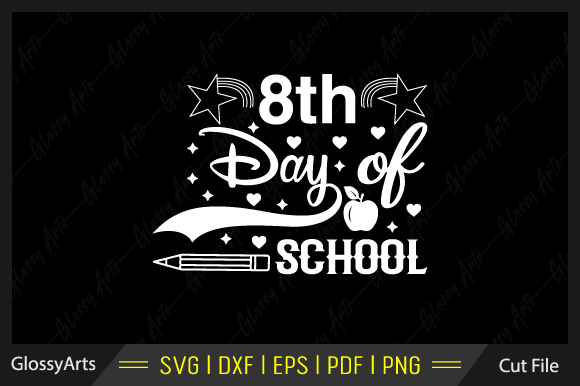
Reviewing the 8th Day of School SVG for Embroidery
As a designer who spends more time staring at stitch simulations than I care to admit, I approach every new digital embroidery file with a mix of curiosity and skepticism. We have all been there: you download a cute graphic, load it into your software, and realize the lines are too close together or the details are too fine for a standard hoop. That is why I took a close look at the 8th Day of School Svg Printable Cut File. While this product is marketed primarily as a printable cut file within the Crafts and Graphics categories, many of us in the embroidery world look for versatile assets that can be adapted for stitching. Here is my practical assessment of how this design holds up when translated from a digital concept to a tangible, stitched reality.
First Impressions and Visual Personality
The first thing that strikes me about the 8th Day of School Svg Printable Cut File is its playful yet structured aesthetic. The theme is specific—capturing that mid-week slump or milestone feeling that parents and teachers love to document on social media. Visually, the layout feels balanced. It does not scream for attention with chaotic elements; instead, it offers a clean silhouette that suggests it would translate well into a machine embroidery design if properly digitized or used as a template for applique.
The mood is lighthearted and functional. It is not overly ornate, which is a blessing for embroidery. Overly complex designs often turn into a mess of thread breaks and bird nests on the bobbin side. This design’s simplicity suggests it would work beautifully as a focal point on a custom apparel piece, such as a child’s t-shirt or a teacher’s tote bag. The visual personality is modern and minimal, fitting perfectly into the current trend of clean, readable text-based embroidery that dominates Etsy seller shops and boutique catalogs.
Real-World Application: The Tote Bag Test
To truly evaluate a design, you have to imagine it on fabric. I pictured this design stitched onto a canvas tote bag design. Canvas is forgiving, with a tight weave that supports various stitch types. If I were using this as a base for an applique design, the bold shapes would allow for clean fabric cuts underneath. Imagine a contrasting cotton fabric appliqued within the outlines, secured with a neat satin stitch border. This technique reduces stitch count, speeds up production, and adds a lovely texture contrast that customers appreciate in a handmade product.
Alternatively, for a sweatshirt embroidery project, the design could be rendered entirely in thread. Here, the choice of thread colors becomes critical. A bright primary color against a heather gray fleece would pop, making it an ideal personalized gift for a student. The clarity of the shapes means that even from a distance, the message is readable. This legibility is crucial for commercial embroidery where brand recognition or message delivery is the goal. If the design were too cluttered, it would lose its impact on textured fabrics like fleece or terry cloth.
Navigating Fabric and Hoop Constraints
While the design is appealing, we must discuss where it requires caution. Embroidery is not just about printing ink on paper; it involves pulling thread through fabric, which causes pull and distortion. If you are planning to use this on a cap or hat, you need to be mindful of the curvature. A design that looks flat on screen can warp on a curved brim. I would recommend keeping the size moderate to avoid excessive density in the center, which can cause the cap to pucker.
For baby embroidery projects, such as onesies or bibs, the fabric is often thin and stretchy. In these cases, the stitch density must be managed carefully. If this SVG is converted into a filled embroidery pattern, ensure that the fill stitch is not too dense. High density on thin knit fabric will result in a stiff, uncomfortable patch that may irritate a child’s skin. Using a high-quality cut-away stabilizer is non-negotiable here to support the stitches without adding bulk.
Another consideration is the hoop size. Since this is a digital asset, you must verify the dimensions before starting. If the design is large, it might require a 5x7 or 6x10 hoop. Always check your machine’s maximum area. If you are working with a smaller 4x4 hoop, you may need to scale the design down, but be warned: scaling down too much can merge small details, turning distinct letters or shapes into a blob of thread. Always run a test stitch on scrap fabric of the same type you intend to use for the final finished product.
Commercial Viability and Brand Consistency
For small shop product creators and craft business owners, consistency is key. The 8th Day of School Svg Printable Cut File offers a level of professionalism that can enhance brand trust. When customers see clean, well-executed embroidery, they perceive higher value. This design, with its clear lines, allows for consistent reproduction across multiple items, whether you are making a batch of holiday embroidery gifts or back-to-school specials.
However, since this is sold as a digital download for graphics and cutting, you must clarify the licensing for embroidery use. Many designers allow their SVGs to be used for physical handmade items but restrict the resale of the digital file itself. Always read the terms. If you are creating design assets for a client, ensure you have the right to modify and stitch the design. Using a printable mockup can help you visualize the final look before committing to thread, saving both time and material costs.
Practical Designer Notes for Best Results
Before you hit the start button on your machine, consider these practical steps to ensure success with this design:
- Test on Scrap First: Never stitch directly on your final garment. Use a similar fabric weight and type to check for puckering or thread breaks.
- Check Contrast: View the design in black and white. If the details disappear in monochrome, they may get lost in stitching. Ensure there is enough separation between elements.
- Select the Right Stabilizer: For woven fabrics like cotton or linen, a tear-away stabilizer may suffice. For knits and stretchy fabrics, always use a cut-away stabilizer to prevent distortion over time.
- Thread Choice Matters: Polyester thread is durable and great for items that will be washed frequently, like school clothes. Rayon offers a nicer sheen for decorative pieces that see less wear.
- Verify Licensing: Confirm whether the license covers commercial use for physical embroidered goods. This is vital for Etsy sellers and boutique owners to avoid legal issues.
In conclusion, the 8th Day of School Svg Printable Cut File is a versatile asset that, with careful adaptation, can transition beautifully into the world of embroidery. Its clean lines and thematic relevance make it a strong candidate for custom apparel, embroidered patches, and seasonal gifts. By respecting the limitations of fabric and hoop size, and by prioritizing proper stabilization and stitch density, you can create a high-quality embroidery project that delights customers and stands up to real-world use. Whether you are a hobbyist making a gift for a grandchild or a professional decorator fulfilling a bulk order, this design offers a solid foundation for creative expression.